
STOCK LEVEL: LOW

LOWEST PRICE EVER


How one quiet moment at a family dinner table led me to the best my body has felt in years — and uncovered a story I never knew my grandmother had been carrying.

I want to be clear about something before I tell you her story.
I wasn't in crisis. I wasn't at my heaviest. I was just... off.
Six weeks of holiday eating, late nights, back-to-back social events, and a stretch of work stress that had been quietly building since October left me feeling like I was wearing someone else's body.
My jeans fit wrong. My stomach was constantly bloated — the kind where you unbutton your pants the second you get home. My energy, which had always been my edge, was gone.
And I'd tried to fix it.
Cut back on sugar for a week. Did salads for three days. Downloaded a tracking app. Bought probiotics from a wellness influencer whose life was clearly not mine.
Nothing moved. Not really.
By then, I'd stopped trying to fix it. I was just waiting for some future version of myself to reset. Just managing.
"You look exhausted," my grandmother said once we'd settled into two chairs away from the noise.
I started to say I was fine.
She handed me a mug before the words came out.
The tea was warm. Pleasant.
"I've been drinking this every morning for five years," she said. "I want to tell you why."
I didn't expect what came next.
My grandmother is 72. Sharp, active, somehow lighter-seeming at 72 than she was at 64.
She's been a practicing herbalist for most of her adult life — the kind of person who has a name for every plant in her garden and an opinion on every supplement I've ever mentioned.
I'd grown up watching her make tinctures and teas for everything. I'd noticed the change in her over the years and assumed it was just... her doing what she always does.
It wasn't just her.
For most of her sixties, she told me, she had felt sluggish in a way she couldn't explain. Not sick — just slow. Heavy.
Her digestion had been uncomfortable for so long she'd stopped talking about it. Bloating after meals she hadn't changed. An afternoon heaviness that arrived daily and didn't leave. And this was someone who'd spent decades studying plants and their effects on the body. She wasn't ignoring the problem — she'd been working on it.
"I tried the individual herbs I knew," she said. "Dandelion for the bloating. Milk thistle for the liver. Different things for energy. Some of it helped, in pieces. But I was chasing it — one thing at a time, never quite getting there."
She looked at her mug.
"I knew what I was looking for. I just hadn't found the right combination yet."
She paused.
"And then I realized — sweetheart, this isn't a willpower problem. It never was."

I'd been living inside a willpower problem for six weeks.
Every choice was measured as discipline or failure. Every bad day was evidence of something I was doing wrong. I'd been waging a quiet war with my own body — and losing — while assuming the problem was effort.

She was telling me the question was wrong entirely.
"After the holidays," she said. "After stress piles up. After your body gets overloaded and under-supported — it doesn't need you to fight harder. It needs you to give it something it's been missing. Different support than you've been offering."
She wrapped both hands around her mug the way she always has.
"This tea gives your body that support. That's all it is. But that's a lot."
I said it out loud and immediately felt embarrassed.
She gave me a look I've been getting my whole life.
"No, sweetheart," she said. "Herbs are never just tea. That's the whole point."
She told me she'd spent the better part of two years reading the research on botanical formulations for metabolism and digestion.
She knew what she was looking for: something that addressed the liver, the gut, and energy — together, not separately.
She'd tried building the combination herself, sourcing individual herbs, experimenting with ratios.
"When I came across Lulutox, I read the ingredient list before I read anything else," she said. "Dandelion and lemongrass for the water retention and bloating. Milk thistle for the liver. Matcha and yerba mate for metabolism. Ginseng for sustained energy. It was the combination I'd been trying to put together on my own."
She ordered it. She said she knew within two weeks it was working.
I went home that night with a box of hers.
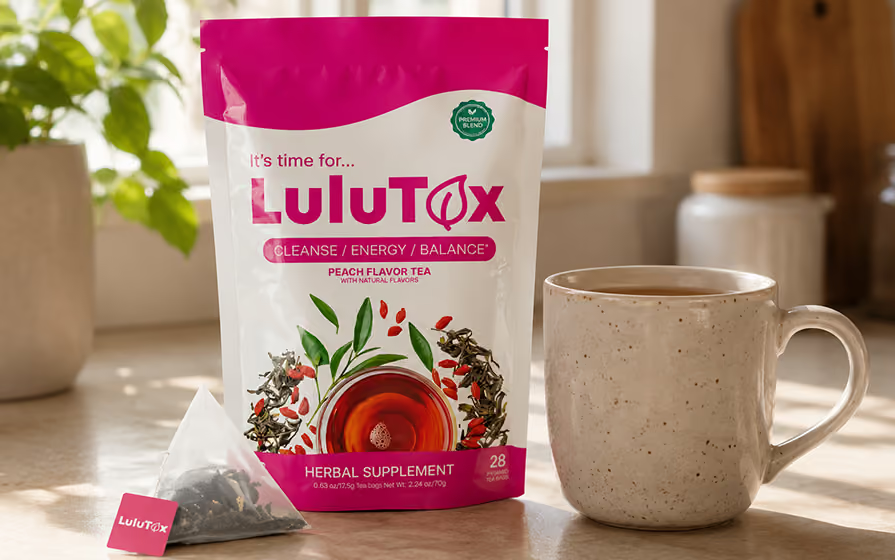
The first morning was nothing dramatic. Boiled water, steeped it for four minutes, drank it while reading something on my phone. I forgot about it until the next day.
By day four, my stomach felt quieter. Less insistent.
The post-meal bloating that had been my default for two months had dialed down — not disappeared, but clearly different. Like something had been turned from a shout to a murmur.
By day eight, I was sleeping better. Waking earlier without being forced to.
By day eleven, I pulled on my jeans and forgot to check if they were comfortable. That sounds small. It wasn't.
I texted my grandmother.
She wrote back three words: "I told you."
After day four I was curious enough to actually ask questions.
She's an herbalist. She's been working with plants for decades. And she'd spent two years researching this specific combination. I figured she probably had things to say.
She did.
"It's not one ingredient doing one thing," she told me. "That's why what I was building on my own wasn't quite working. It's 13 plants working together in four directions. What I think of as the Four-Path Morning Reset."
Matcha, yerba mate, and guarana. "Not a stimulant," she was clear about that. "A sustained metabolic activation — the kind that builds over days rather than spikes and crashes. Your body starts running warmer, more efficiently. You feel it as energy before you feel it on the scale."
Dandelion and lemongrass. "These two have centuries of use behind them for a reason," she said. "Dandelion in particular is one of the most well-studied plants for digestive comfort and water retention. If you've been carrying that persistent puffiness — the kind that makes your clothes fit differently by the end of the day — this is the pathway doing the work."
Milk thistle and nettle. "This is the one most people don't think about," she told me. "But I always start here. A sluggish liver means a sluggish everything — your body holds onto what it should be releasing. Milk thistle has been used to support liver function for generations. It's in almost every serious herbal detox formulation for good reason."
Ginseng and sencha. "Not the spike-and-crash," she said. "The kind of energy that feels like your system is just... working. Ginseng has a long history as an adaptogen — it helps the body respond to stress rather than be flattened by it."
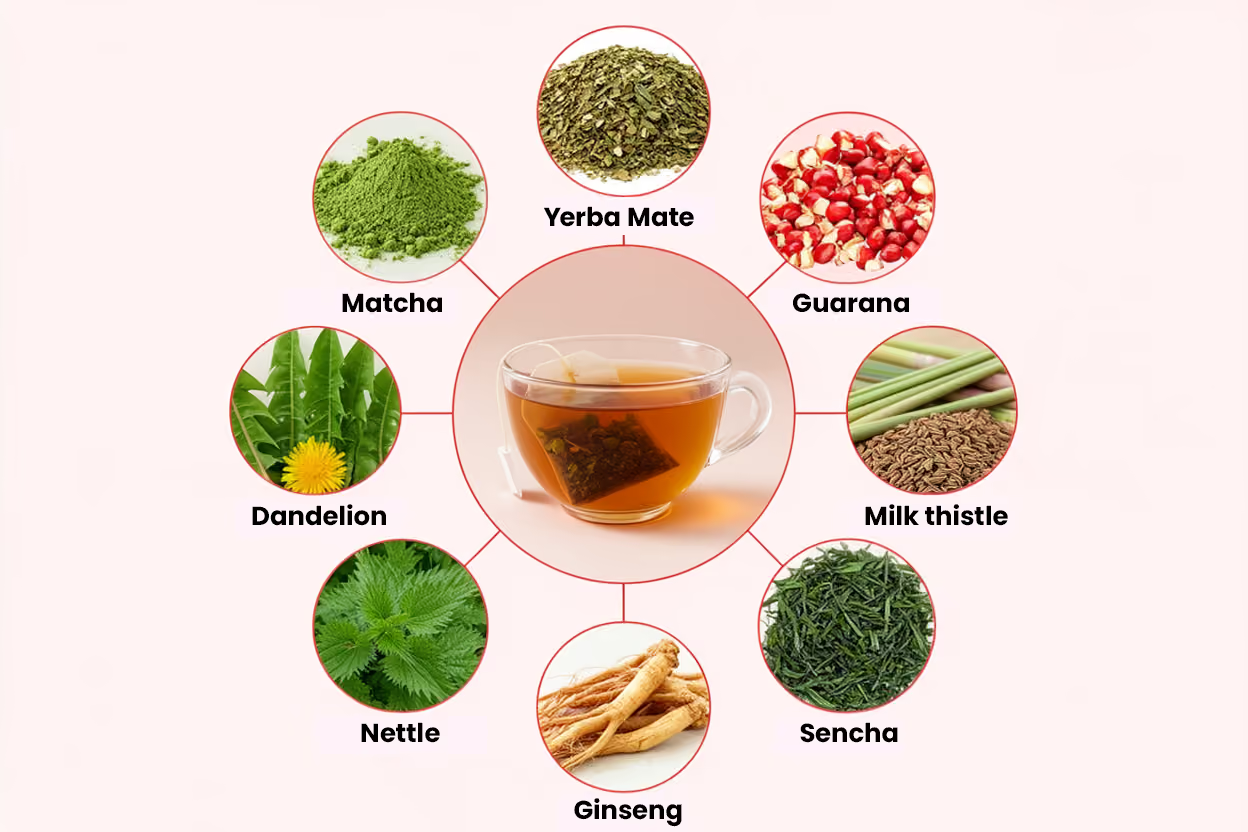
"The reason I couldn't replicate it myself," she said, "is that getting the ratios right matters as much as the ingredients. That's what took me two years to find."
That reframe mattered to me. I hadn't been failing at discipline. I'd just been missing the support that would let my body do what it was trying to do.
By week three, I had stopped thinking of my body as a problem.
That sounds simple. It wasn't.
The bloating was manageable — actually manageable, not "white-knuckling through it" manageable.
My energy was consistent in a way it hadn't been in months. I'd lost some weight — I hadn't been tracking obsessively, but I felt it in my clothes and in how I moved.
My grandmother calls it "the relief of not fighting your own body."
That's the only description that's ever felt right.
She started Lulutox at 67.
First two weeks: the mid-afternoon energy crashes that she'd accepted as normal started lifting.
End of month one: the post-meal bloating she'd been managing for years had reduced significantly.
She says she noticed it most on the mornings she forgot to drink it — the difference reminded her why she hadn't missed a day since.
After three months: she'd lost weight. Not because she'd started a diet. Because her body had started cooperating instead of resisting.
"I didn't change anything else," she told me. "I just gave my body something it had been missing."
She's 72. Five years of the same morning ritual. She's not stopping.

And I understand now why she waited five years before telling me.
She thought I'd say it was just tea.
She was right. But she told me anyway.
My grandmother carried this quietly for years.
She didn't offer it as advice. She waited until she saw me actually struggling, and then she handed me a mug instead of a lecture. That's the most useful thing anyone has done for me in a long time.
If you've been feeling off — after the holidays, after a stressful season, after the kind of stretch that leaves you feeling like a stranger in your own body — this is worth knowing about.
It's not a dramatic transformation promise.
It's the feeling of not fighting your own body anymore. Of giving it something that actually speaks its language.
Grandma figured that out at 67. I'm glad I didn't wait that long.


If you'd told me that evening that a morning cup of tea was going to quiet the fight I'd been having with my own body, I would have smiled and changed the subject.
But here's the thing about grandmothers.
They're usually right.
"78% of Lulutox customers report reduced bloating within the first 14 days."






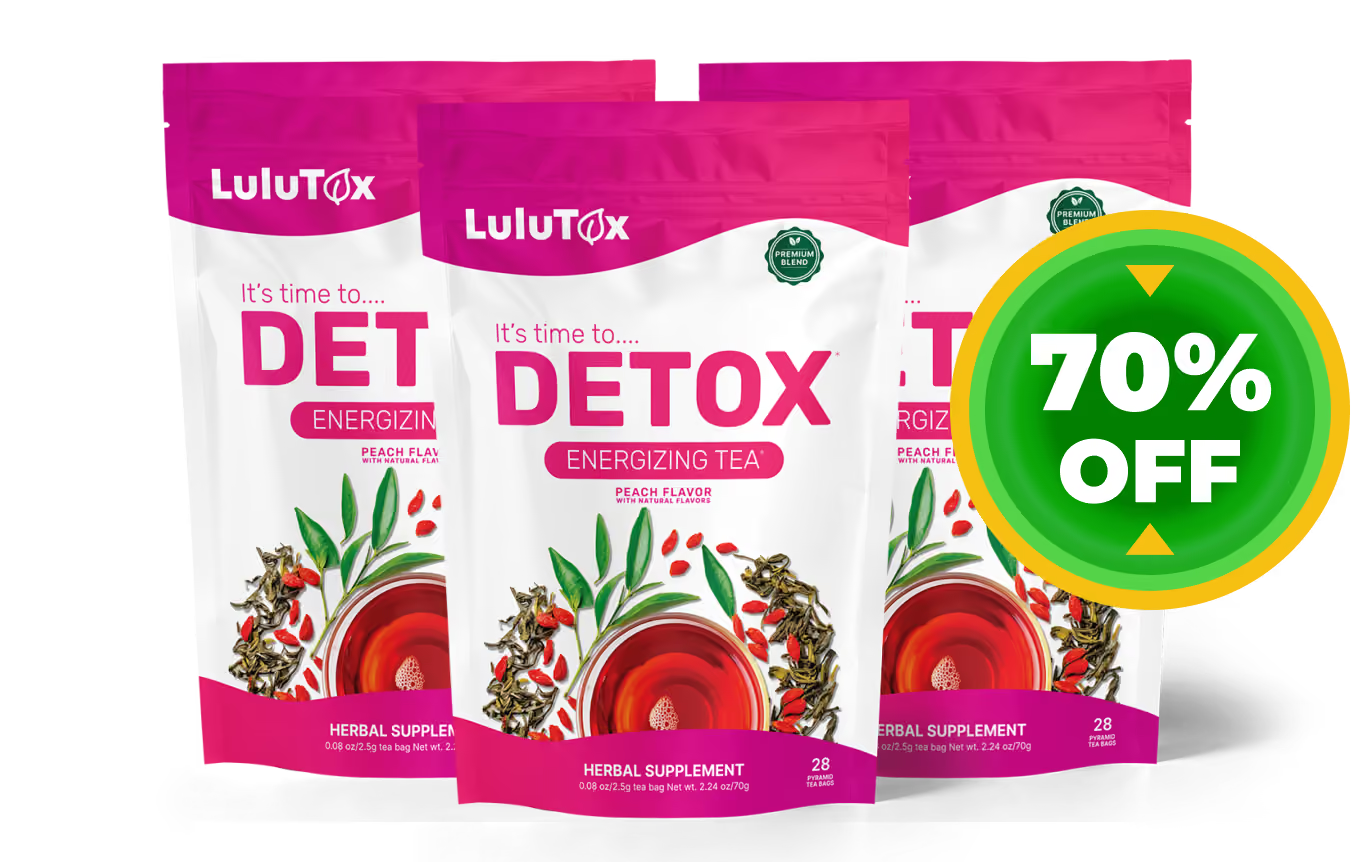
Lulutox is only sold through their official website — not in stores. If you're searching online, be careful: there are imitations, and they don't use the same formula.

